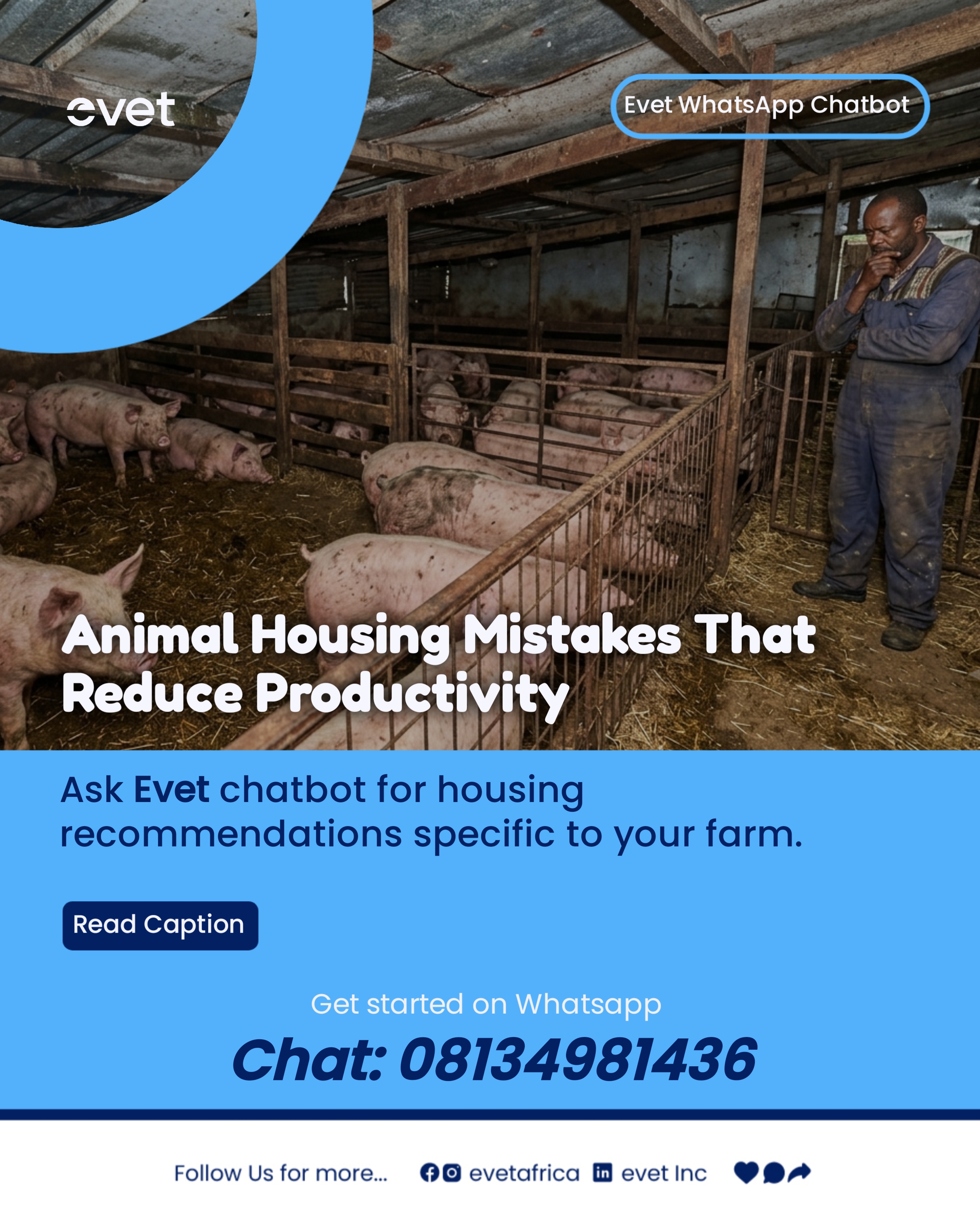
Animal Housing Mistakes That Reduce Farm Productivity
Good animal housing is more than providing a roof and a fence. The environment in which animals live directly affects their health, comfort, growth, reproduction, and overall farm productivity.
For livestock farmers, especially pig farmers, poor housing can create problems that are expensive to correct. Animals may experience unnecessary stress, increased exposure to disease, poor feed conversion, injuries, slower growth, and reduced production.
Common Housing Mistakes Farmers Should Avoid
1. Overcrowding
Keeping too many animals in a limited space increases competition for feed, water, and resting areas. It can also increase aggression, stress, injuries, and the spread of infectious diseases.
Farmers should provide adequate space based on the animal species, age, production stage, and housing system.
2. Poor Ventilation
A poorly ventilated pen can trap heat, moisture, ammonia, dust, and unpleasant gases. This can affect respiratory health and make animals uncomfortable.
Good ventilation should allow fresh air to enter while removing excess heat, moisture, and harmful gases without exposing animals to strong drafts.
3. Poor Drainage and Waste Management
Wet, dirty floors create an unhealthy environment and can increase the risk of infections, parasites, hoof and skin problems, and unpleasant odours.
Proper drainage and regular removal of manure are essential parts of good farm hygiene.
4. Ignoring Temperature and Heat Stress
Livestock can be affected by excessive heat, particularly in Nigeria's hot climate. Heat stress may reduce feed intake, growth, fertility, and production.
Farmers should provide adequate ventilation, shade, clean water, and appropriate cooling measures where necessary.
5. Poor Access to Clean Water
Animals need continuous access to clean, safe drinking water. Dirty or inadequate water supply can affect feed intake, growth, health, and productivity.
Water points should also be checked regularly to ensure they are functioning properly and are not contaminated.
6. Neglecting Hygiene and Biosecurity
A poorly maintained housing system can become a breeding ground for disease-causing organisms. Regular cleaning, disinfection, pest control, proper waste disposal, and isolation of sick animals are important components of farm biosecurity.
Why Does Good Housing Matter?
Healthy animals are more likely to grow efficiently, reproduce successfully, and perform closer to their production potential.
Investing in proper animal housing is therefore not simply an expense—it is an investment in livestock health, animal welfare, productivity, and farm profitability.
If you are unsure whether your current housing system is suitable for your animals, seek professional veterinary or farm-management advice before a small housing problem becomes a major financial loss.
Need help with your farm?
The EVET WhatsApp Chatbot can provide convenient access to veterinary and farm-management support, including guidance on animal health and housing.
You can also use EVET to access veterinary support, farm inputs, livestock marketplace services, and professional veterinary care.
What housing challenge is affecting your farm right now—overcrowding, poor ventilation, heat, drainage, or hygiene? Share your experience in the comments.