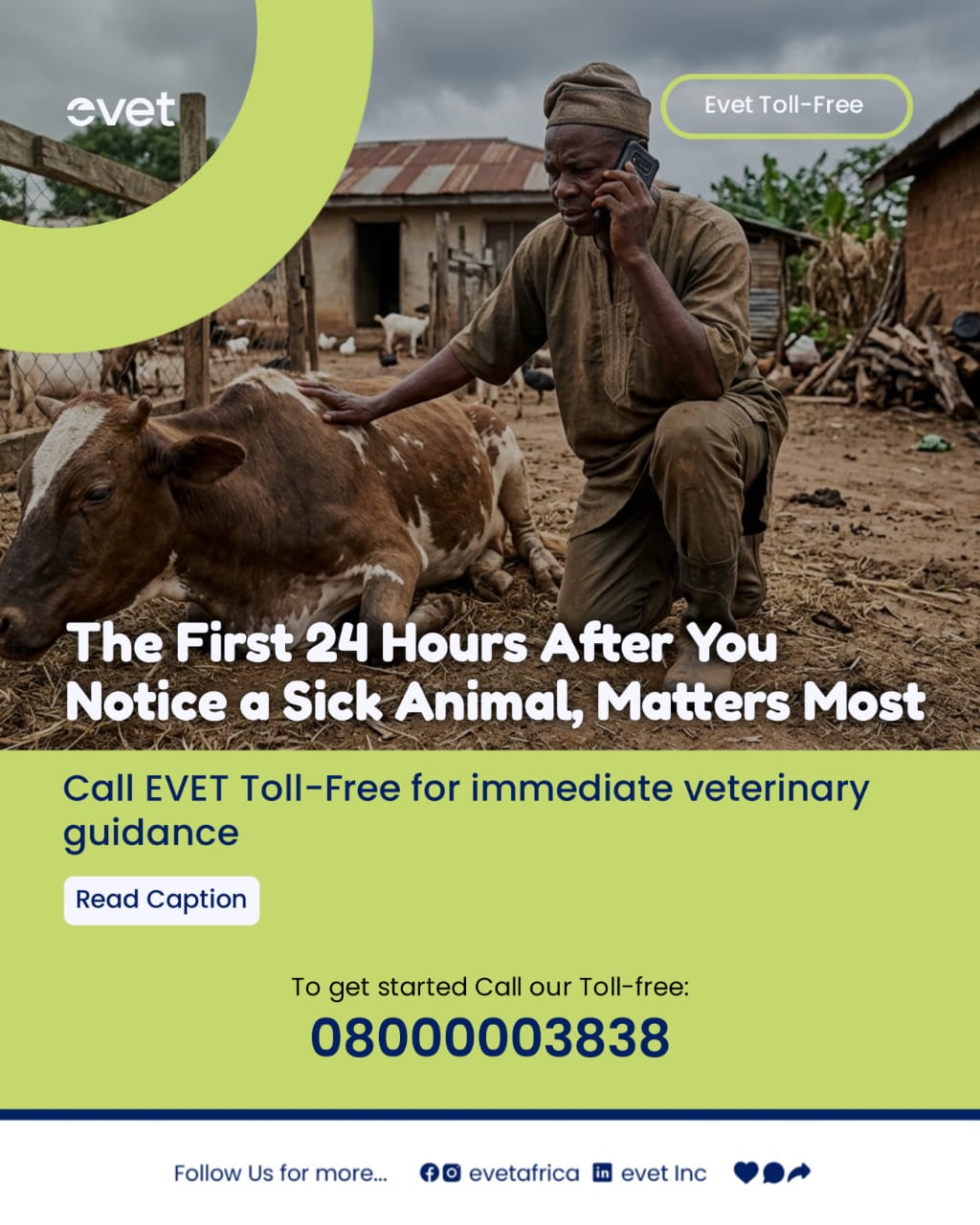
The First 24 Hours After You Notice a Sick Animal, Matters Most
There's a particular kind of dread every livestock farmer knows — walking into the pen and noticing that one animal isn't quite right. It's off its feed, standing differently, breathing a little too fast, or simply lying down when it should be up and moving. In that moment, a decision has to be made, and how quickly it's made often determines the outcome.
By the time symptoms are visible, illness has usually already been developing beneath the surface for hours, sometimes days. What a farmer does in the 24 hours that follow that first sign is frequently more decisive than the illness itself.
Why the First 24 Hours Carry So Much Weight
Animal diseases — whether infectious, digestive, or environmental in origin — tend to follow a pattern: a slow, quiet onset followed by a rapid decline once the body's defenses are overwhelmed. Early in that window, intervention is often simple and inexpensive — isolation, hydration, a correctly diagnosed treatment. Left unattended for even a day, the same condition can spiral into something far more difficult, or spread through a group of animals sharing the same space, water source, or feed.
For farmers, this creates a real cost equation. Acting fast and correctly in the first 24 hours can mean the difference between:
- Treating one animal or losing several
- A minor veterinary bill or a major financial setback
- A short recovery period or a total loss to the batch
This is why veterinary professionals consistently emphasize the same principle: time is a treatment variable, not just a formality.
The Mistakes Farmers Make in This Window
Unfortunately, the first 24 hours are also when the most damaging mistakes tend to happen — not out of negligence, but out of understandable uncertainty:
1. Waiting to "see if it gets better."
Many farmers give an animal a day or two to recover on its own, hoping the symptoms pass. In diseases that progress quickly, this delay can be the costliest decision of the entire episode.
2. Guessing at treatment.
Without a proper diagnosis, farmers sometimes administer whatever medication is on hand or was used for a different animal previously. Wrong treatment doesn't just fail to help — it can actively worsen the animal's condition or mask symptoms that a vet would otherwise catch.
3. Not isolating the animal.
A sick animal left among the herd puts every other animal at risk, especially in cases of contagious illness. Isolation is one of the simplest, most effective first steps — and one of the most frequently skipped.
4. Struggling to reach expert help in time.
In many farming communities, the nearest veterinarian may be hours away, and by the time one is reached, the window for simple intervention has closed.
What the First 24 Hours Should Actually Look Like
Veterinary best practice for this critical window is straightforward, even if it's often overlooked in the stress of the moment:
1. Isolate the animal from the rest of the herd or flock immediately, to prevent potential spread and allow closer monitoring.
2. Observe and record symptoms carefully — appetite, temperature, breathing, movement, discharge, and any changes in behavior. These details matter enormously when describing the case to a vet.
3. Avoid self-medicating without proper diagnosis. Administering the wrong drug, or the right drug at the wrong dose, can complicate recovery.
4. Reach out to a veterinary professional as early as possible — not after trying everything else first, but as one of the first steps taken.
Closing the Access Gap
The biggest obstacle in this entire process usually isn't a lack of knowledge — it's a lack of access. Many farmers know, in principle, that they should call a vet quickly. The challenge is having one reachable in the moment it matters.
This is the gap EVET was built to close. Through a toll-free veterinary support line, farmers can reach expert guidance immediately when illness is first noticed — no travel, no appointment, no waiting. A quick call can mean the difference between catching a problem early and losing an animal, or several, to delay.
To get started, call the EVET toll-free line: 08000003838
The Bottom Line
Livestock illness rarely announces itself loudly at first — it's usually a quiet warning sign that either gets acted on quickly or gets missed until it's too late. The first 24 hours are not a waiting period; they're a window of opportunity. Farmers who treat them that way — isolating early, observing closely, and reaching expert help immediately — consistently protect more of their herd, their investment, and their peace of mind.
When it comes to animal health, speed saves more than symptoms ever will.