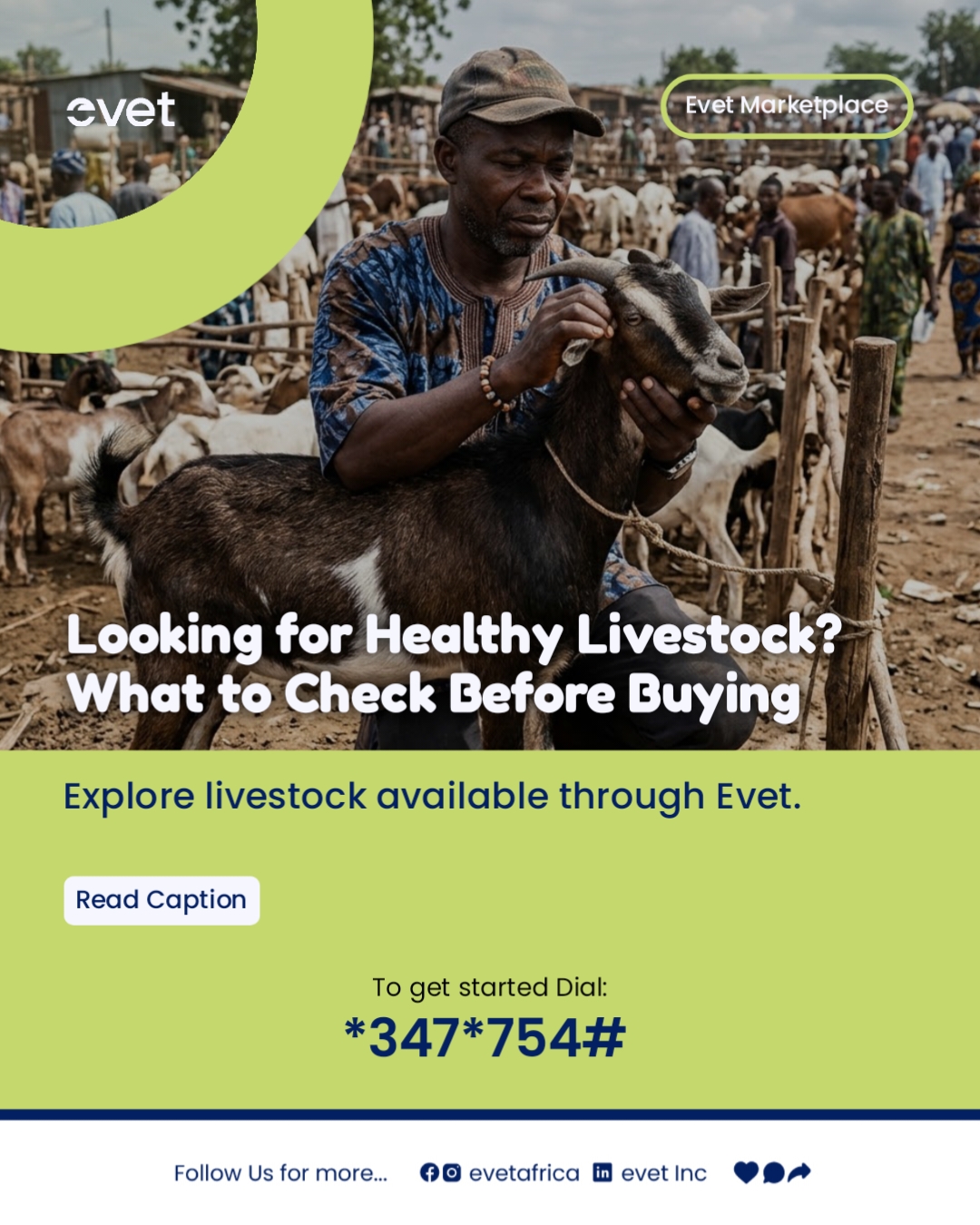
Looking for Healthy Livestock? What to Check Before Buying
Every livestock business starts with a purchase. The animals you bring onto your farm today determine your feed costs, your veterinary bills, your growth rates, and ultimately your profit months from now. Yet in many livestock markets, the decision to buy is made in minutes, based on a quick look and a negotiated price.
That's a risky way to make one of the biggest investments on a farm. A sick or underperforming animal doesn't just fail to deliver returns. It can bring disease onto your farm, infect healthy stock, and turn a promising batch into a costly lesson.
The good news is that most health problems can be spotted with a careful, systematic inspection, if you know what to look for.
Why Buying Decisions Matter So Much
A purchase price is only part of what an animal costs. Once you factor in feed, housing, labor, and treatment, the real cost of a poor purchase multiplies quickly:
- Treatment costs: An animal that arrives already sick needs drugs, and often a veterinarian's time.
- Lost growth and productivity: Animals fighting infection or parasites convert feed poorly and grow slowly.
- Disease spread: One infected animal can introduce illness to an entire herd or flock.
- Mortality: Weak animals are far more likely to die, wiping out both the purchase price and everything invested since.
Spending ten minutes on inspection before buying is one of the cheapest forms of farm insurance available.
A Practical Pre-Purchase Checklist
1. Eyes
A healthy animal has bright, clear, alert eyes. Cloudiness, excessive watering, discharge, or a dull, sunken look can signal infection, dehydration, or systemic illness. In goats and sheep, pale tissue inside the lower eyelid can also indicate anemia, often linked to parasites.
2. Coat and Skin
The coat should be smooth, even, and appropriate for the breed. Warning signs include:
- Patchy hair loss
- Sores, scabs, or lumps
- Visible ticks, lice, or mites
- Rough, dull, or staring coats that don't respond to normal conditions
Skin conditions can spread quickly between animals, so these are worth taking seriously.
3. Posture and Movement
Watch the animal move before you buy it. A healthy animal stands squarely, walks freely, and stays engaged with its surroundings. Be cautious of animals that are:
- Limping or stiff
- Standing apart from the group
- Reluctant to move or easily exhausted
- Holding their head low or showing unusual posture
4. Nose and Breathing
Breathing should be quiet and regular. Watch for nasal discharge, coughing, wheezing, or labored breathing, all of which may point to respiratory disease, which spreads rapidly in crowded conditions.
5. Appetite and Body Condition
A healthy animal eats willingly and carries appropriate weight for its age and breed. Animals that are noticeably thin, bloated, or uninterested in feed should raise concern. Where possible, observe the animal feeding rather than relying on the seller's word that it eats well.
6. Droppings
Droppings reveal a lot about internal health. Firm, well-formed pellets or stools are generally a good sign. Watery, bloody, or unusually foul-smelling droppings can indicate parasites or infection.
7. Age and Teeth
Confirm that the animal's age matches what the seller claims. For goats, sheep, and cattle, dentition is a reliable guide. Age matters enormously whether you're buying for fattening, breeding, or milk production, and misrepresented age is a common way buyers lose value.
Questions to Ask the Seller
Observation is only half the picture. The right questions can reveal what inspection can't:
- Where did the animal come from, and how was it raised?
- What is its vaccination history?
- When was it last dewormed?
- Has it been treated for any illness recently?
- Has it been in contact with sick animals?
Be wary of sellers who are vague, evasive, or unable to say where their stock originated.
Don't Skip Quarantine
Even a thorough inspection can miss early-stage illness, so new arrivals should never go straight in with your existing stock. A quarantine period of about two weeks, with the new animals housed separately and watched closely, gives hidden conditions time to show themselves before they can reach the rest of your herd or flock. It's also a good time to deworm and vaccinate as appropriate, ideally with advice from a veterinarian.
Reducing Risk Through Trusted Sources
Inspection skills help, but even experienced farmers can be fooled, especially in busy, crowded markets where animals are moved quickly and little is known about their history. The most reliable way to reduce risk is to buy from a source you can trust, where animals are traceable and the buying process is transparent.
That's where Evet comes in. Farmers can explore livestock available through Evet, taking some of the guesswork out of the purchase and starting their next batch with greater confidence.
To get started, dial \347\*754#.*
The Bottom Line
Healthy livestock is the foundation of a profitable farm. Take the time to inspect each animal carefully, ask the right questions, quarantine new arrivals, and buy from sources you can trust. The effort you invest before the purchase will pay for itself many times over in the months that follow.